
How do you want to shop?
What Are Cannabis Concentrates? Types, Potency & Extraction Explained
by Puff Cannabis | September 10, 2026
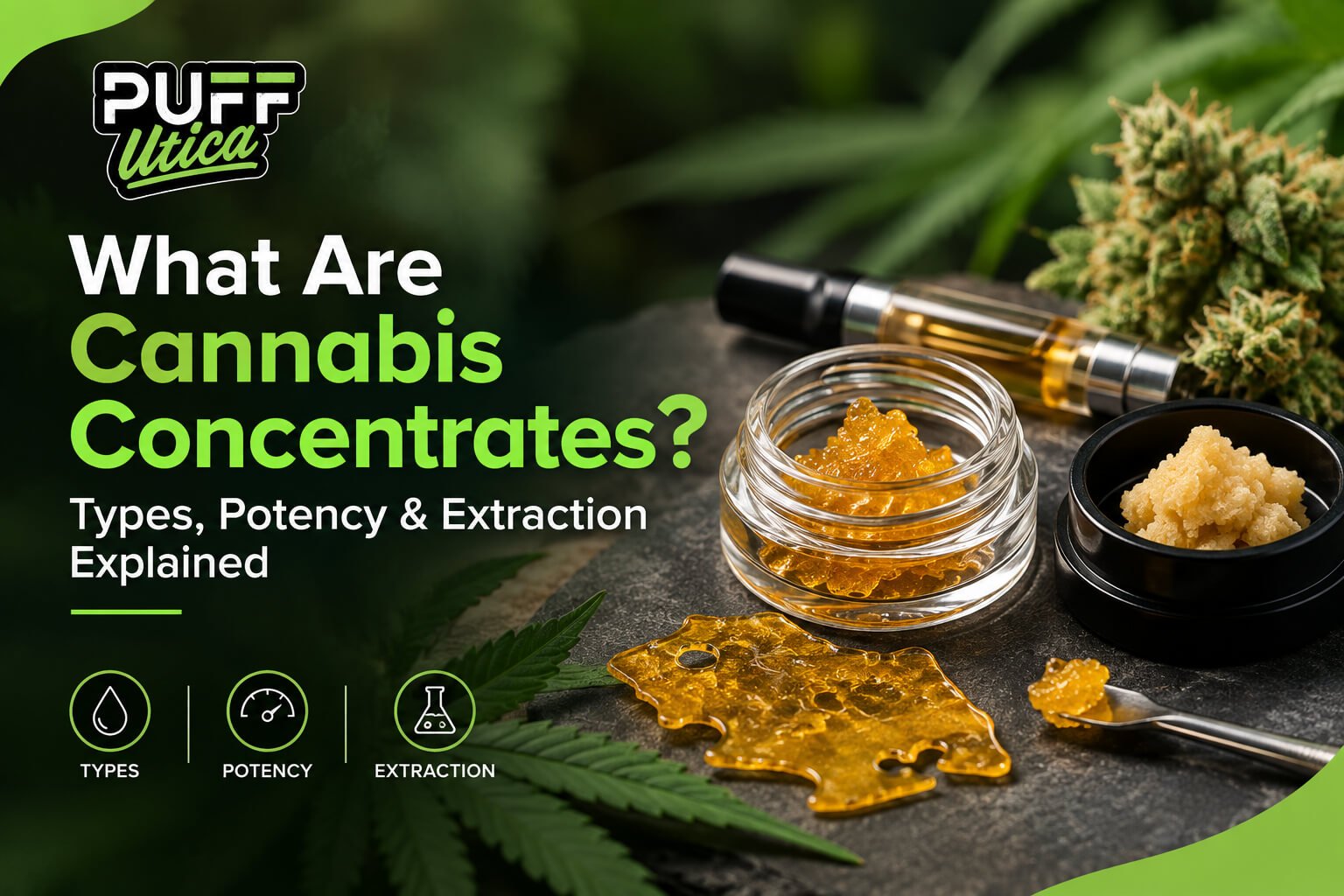
Cannabis concentrates are products made by concentrating compounds found in cannabis, especially cannabinoids and terpenes. They come in many forms, including wax, shatter, live resin, rosin, and hash.
Because concentrates contain less plant material, they can be far more potent than flowers. In this guide, you’ll learn how to concentrate, how to work, how they’re made, and what makes each type different.
Understanding Cannabis Concentrates
Cannabis concentrates contain a concentrated number of compounds found in the cannabis plant. These compounds mainly include cannabinoids and terpenes. Manufacturers remove much of the plant material during processing. As a result, the final product can have a stronger cannabinoid and terpene profile than flowers.
Concentrates can have very different textures and appearances. Some are sticky and oily, while others are dry, brittle, or crystalline. The final texture often depends on the starting material and production method.
What Are Cannabis Concentrates Made From?
Most cannabis concentrates begin with cannabis flowers or other parts of the plant that contain trichomes. Trichomes are tiny resin-producing structures found mainly on cannabis flowers. They contain cannabinoids, terpenes, and other compounds that contribute to the plant’s characteristics.
The starting material can be dried and cured or fresh-frozen. Fresh-frozen cannabis can help preserve volatile compounds, especially terpenes. Therefore, the starting material can strongly influence the final concentrate’s aroma, flavor, and profile.
The Role of Trichomes, Cannabinoids, and Terpenes:
Trichomes play a central role in concentrating production. They containmany compounds that manufacturers want to collect. These include THC, CBD, and other cannabinoids.
Terpenes are aromatic compounds that contribute to cannabis aroma and flavor. They can also help distinguish one concentrate from another. Therefore, looking only at THC percentage does not provide a complete picture of a product’s characteristics.
Exploring the Different Types of Cannabis Concentrates
Cannabis concentrates come in many varieties. Some names describe texture, while others describe the production method or starting material. Therefore, learning the basic categories can make concentrate labels easier to understand.
Common types include:
1. Wax
2. Shatter
3. Crumble
4. Badder or budder
5. Live resin
6. Live rosin
7. Rosin
8. Hash
9. Kief
Each type can have a different texture, potency, terpene profile, and production method.
Wax, Shatter, Crumble, and Badder:
Wax usually has a soft and sticky texture. Shatter has a firmer, glass-like consistency. Crumble has a dry texture that breaks apart easily. Badder or budder generally has a soft, whipped consistency.
These names often describe how the final product looks or feels. However, appearance alone does not determine quality. The starting material, processing, testing, cannabinoid profile, and terpene content also matter.
Live Resin and Live Rosin:
Live resin and live rosin both commonly use fresh-frozen cannabis. Freezing the plant soon after harvest helps preserve volatile compounds. However, their production methods are different.
Live resin uses solvent-based extraction. Live rosin uses solventless processing. Therefore, the two products can have different textures and production characteristics despite using similar starting materials.
Hash, Kief, and Dry Sift:
Hash is one of the oldest forms of cannabis concentrate. It is made by collecting and compressing cannabis trichomes. Kief consists mainly of loose trichome-rich material.
Dry sift uses screens to separate trichomes from dried cannabis. Unlike solvent-based extraction, these methods rely on physical separation. As a result, they can produce solventless concentrates.
Rosin, Distillate, Sauce, and THCA Diamonds:
Rosin is a solventless concentrate made with heat and pressure. Distillate goes through additional refinement to create a highly concentrated cannabinoid product. Sauce typically has a more fluid consistency and can contain significant terpene content.
THCA diamonds are crystalline structures containing highly concentrated THCA. When THCA is heated, it can convert into THC. Consequently, diamonds can provide a highly concentrated cannabinoid product.
How Cannabis Concentrates Are Made
There are several ways to produce cannabis concentrates. However, most methods fall into two broad categories. These are solvent-based and solventless processing.
The method can influence the final product’s texture, aroma, terpene content, and cannabinoid profile. Therefore, understanding of extraction methods can help consumers better understand product labels.
Solvent-Based Extraction:
Solvent-based extraction uses substances such as butane, propane, ethanol, or carbon dioxide. These materials help separate cannabinoids and other compounds from cannabis plant material.
Products made through solvent-based methods can include live resin, shatter, wax, crumble, and several other concentrate types. Professional processing also requires proper equipment and testing.
Because some extraction solvents can be hazardous, concentrate extraction should remain a controlled professional process. Proper processing and testing also help address potential residual-solvent concerns.
Solventless Extraction:
Solventless concentrates use physical methods rather than chemical extraction solvents. These methods can involve water, ice, agitation, heat, or pressure.
Common solventless products include rosin, live rosin, ice water hash, and dry sift. For example, rosin uses heat and pressure to separate resin from suitable cannabis material.
Solventless does not automatically mean higher quality. Product quality still depends on the cannabis material, processing, storage, and testing.
How Extraction Methods Affect Flavor, Potency, and Terpenes:
Extraction methods can affect which compounds remain in the final product. Fresh-frozen material can help preserve volatile terpenes. This feature contributes to the distinctive aroma found in products such as live resin and live rosin.
However, extraction is only one part of the process. Cultivar selection, growing conditions, processing, storage, and testing can also affect the final profile.
How Potent Are Cannabis Concentrates?
Cannabis concentrates are generally more potent than traditional flower. This happens because processing removes much of the plant material. The remaining product therefore contains a higher concentration of cannabinoids.
A 2025 study published in Scientific Reports tested cannabis products from licensed Colorado dispensaries. Researchers analyzed 277 products, including 99 concentrates and 178 flower products. They found that mean observed THC levels of 70.7% in concentrates compared with 20.8% in flower.
This difference shows why consumers should pay close attention to product labels. Potency can vary considerably between products, so checking laboratory information is useful.
Understanding THC, THCA, and CBD:
THC is the cannabinoid most associated with cannabis’s intoxicating effects. THCA is an acidic form that can convert into THC when heated.
CBD is another major cannabinoid found in cannabis. It does not produce the same intoxicating effects associated with THC. However, different concentrates can contain different combinations of THC, THCA, CBD, and other cannabinoids.
Why Concentrates Are More Potent Than Flower:
Cannabis flower contains cannabinoids and terpenes along with a large amount of plant material. Concentrate production removes much of that material. Therefore, the finished product can contain a much higher proportion of cannabinoids.
For example, the 2025 Scientific Reports study found a large difference between the average THC levels of tested concentrates and flower. However, individual products can vary considerably.
Because of this higher potency, concentrates may not be the best starting point for someone who is unfamiliar with cannabis products.
Understanding Lab Results and Certificates of Analysis:
A Certificate of Analysis, commonly called a COA, provides laboratory information about a cannabis product. Depending on local requirements, it can include cannabinoid levels, terpene information, and contaminant testing.
A COA can also help consumers compare labeled potency with laboratory results. This matters because the 2025 Scientific Reports study found differences between labeled and observed THC levels in tested products.
Therefore, reliable third-party testing can provide useful information before purchasing a concentrate.
Cannabis Concentrates vs. Flower
Both concentrates and flower come from the same cannabis plant. However, their composition and potency can differ significantly.
Feature | Cannabis Flower | Cannabis Concentrates |
Plant material | Higher amount | Much less |
Cannabinoid concentration | Generally lower | Generally higher |
Texture | Dried plant material | Wax, oil, resin, glass, or crystals |
Terpene profile | Depends on cultivar | Often concentrated |
Product variety | Mostly flower and pre-rolls | Many concentrate formats |
Potency | Usually lower | Usually higher |
Concentrates can also offer more variety in texture and processing methods. For example, live resin and live rosin focus on preserving different aspects of the plant’s profile.
However, neither format is automatically better. The best choice depends on product characteristics, personal preferences, experience, and local regulations.
Potency and Cannabinoid Content:
The biggest difference is usually cannabinoid concentration. Concentrates contain less plant material and therefore can contain significantly more THC or other cannabinoids by weight.
As a result, a small quantity of concentrate can contain more THC than the same weight of flowers. This makes product labeling especially important.
Flavor and Terpene Profiles:
Terpenes contribute to the aroma and flavor of cannabis. Concentrates can preserve and concentrate on these compounds depending on the starting material and processing method.
Live resin and live rosin are often associated with terpene-rich profiles. However, terpene content can vary between products. Therefore, checking available laboratory information can provide more useful details than relying on product names alone.
Product Variety and Consumption Methods:
Flower mainly comes as dried cannabis buds or products made from them. Concentrates offer a much wider range of textures and formats.
Common examples include wax, shatter, rosin, live resin, hash, and distillate. Some concentrates are designed for vaporization, while others can be incorporated into different cannabis products.
What to Consider When Choosing a Cannabis Concentrate
Choosing a concentrate involves more than selecting the highest THC percentage. Instead, consider the product’s cannabinoid profile, extraction method, terpene profile, and laboratory information.
A simple checklist can help:
1. Check the cannabinoid content.
2. Review the available COA.
3. Consider the extraction method.
4. Look at the terpene profile.
5. Check the product’s storage information.
6. Follow applicable local regulations.
This approach makes it easier to compare products based on useful information rather than marketing claims.
Potency and Cannabinoid Profile:
Start by checking THC, THCA, CBD, and other listed cannabinoids. Higher potency does not automatically mean better quality.
Instead, think about the product’s overall cannabinoid profile. A balanced profile may be more relevant than simply choosing the product with the highest THC percentage.
Extraction Method and Terpene Profile:
Next, consider how the concentrate was produced. Solvent-based and solventless products have different processing methods. They can also offer different textures and terpene characteristics.
If flavor and aroma matter to you, check the available terpene information. This can provide more insight into the product than THC percentage alone.
Product Quality and Lab Testing:
Quality testing is another important factor. Look for clear labeling and reliable laboratory information. A COA can provide useful details about cannabinoids and potential contaminants.
Also, check the packaging for production information and required compliance details. When available, independent testing can make product comparisons easier.
How to Store Cannabis Concentrates Properly
Storage can affect a concentrate’s texture, aroma, and overall quality. Heat, light, air, and moisture can all affect cannabis products over time.
For that reason, concentrates should generally remain in an appropriate sealed container. They should also stay away from excessive heat and direct sunlight.
Protecting Concentrates from Heat, Light, and Air:
Heat can change the texture of some concentrates. Light and oxygen can also contribute to changes over time.
Therefore, keep concentrates sealed and away from direct light. Avoid unnecessary exposure to air whenever possible.
Storage Considerations for Different Concentrate Types:
Different concentrates can have different storage needs. Some products may require cooler conditions, while others can remain stable in a suitable sealed container.
Always follow the manufacturer’s storage instructions. In addition, keep cannabis products securely stored and away from children and pets.
Frequently Asked Questions About Cannabis Concentrates
What Is the Difference Between a Cannabis Concentrate and an Extract?
The terms are sometimes used interchangeably. Technically, an extract is a type of concentrate made using a solvent. Not every concentrate uses a solvent, so not every concentrate is technically an extract.
Are Cannabis Concentrates Stronger Than Flower?
Generally, yes. Concentrates usually contain much higher cannabinoid concentrations than flowers. A 2025 study found an average observed THC levels of 70.7% in tested concentrates compared with 20.8% in tested flower.
What Is the Difference Between Live Resin and Live Rosin?
Both can use fresh-frozen cannabis. Live resin uses solvent-based extraction, while live rosin uses solventless processing. Therefore, they differ mainly in their production methods and resulting characteristics.
What Is the Difference Between Solvent and Solventless Concentrates?
Solvent-based concentrates use substances such as butane, propane, ethanol, or CO2. Solventless products rely on physical processes such as water, ice, heat, pressure, or agitation.
Explore Cannabis Concentrates at Puff Utica
Cannabis concentrates offer many options for consumers interested in different textures, cannabinoid profiles, and terpene characteristics. From wax and shatter to live resin, rosin, and hash, each type has distinct qualities.
Understanding the production method and potency can make product comparisons easier. It also helps you read labels and laboratory information with greater confidence.
For more information about available cannabis concentrates, explore Puff Utica and its current product offerings. Always review product information and follow applicable local laws and regulations before making a purchase.